Inquiry Us
Leave Your Message

Top 10 CNC Vertical Milling Machines for Global Buyers

Choosing a Cnc Vertical Milling Machine is a serious investment for global manufacturers. It affects accuracy, production speed, operator safety, and long-term costs. This guide examines ten machines for different industrial needs, from compact workshops to demanding production floors.

The comparison considers spindle power, travel range, control systems, tooling flexibility, service support, and actual operating experience. A machine may look impressive in a showroom, yet perform poorly with unstable foundations or weak maintenance planning. Small details matter. A rigid cast-iron frame can reduce vibration during heavy cuts. A responsive control can shorten setup time beside the machine.

John Saunders, founder of NYC CNC and an experienced machining educator, has said, “A CNC machine is only as capable as the process around it.” That principle guides this review. Machine capability alone does not guarantee profitable results. Workholding, cutting tools, programming skill, coolant control, and operator training remain essential.

The list is not absolute. Buyer priorities differ across regions, materials, budgets, and production volumes. Some rankings may change after testing local service response or spare-parts availability. That limitation deserves attention. A powerful machine can become an expensive burden when support is slow or training is unavailable.

Readers will find practical comparisons rather than broad marketing claims. Each Cnc Vertical Milling Machine is assessed through measurable features and realistic factory conditions. The goal is clearer decision-making, not a perfect universal answer.
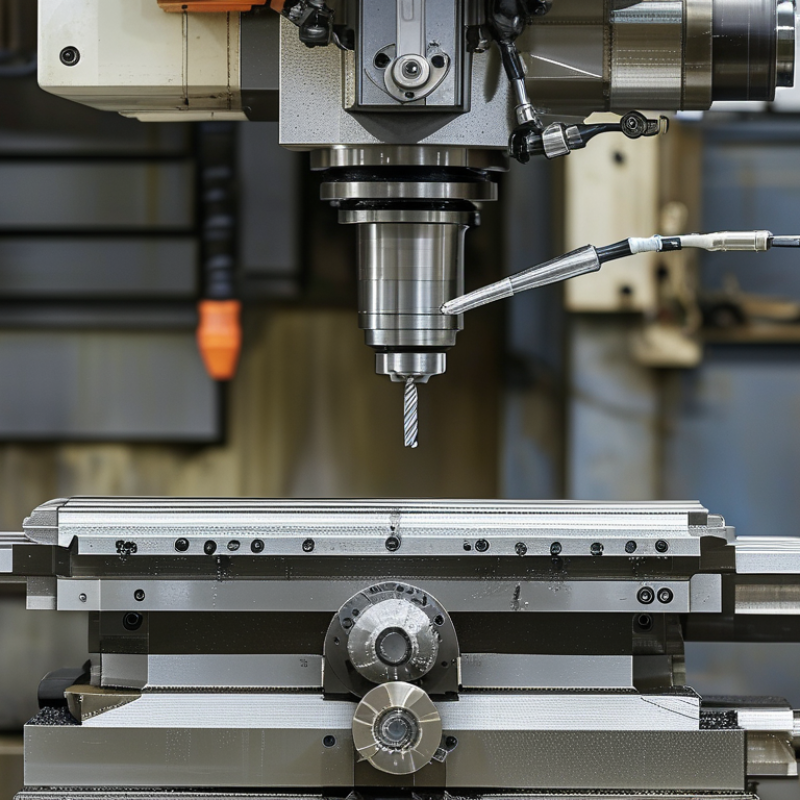
Top 10 CNC Vertical Milling Machines for Global Buyers

What Defines a CNC Vertical Milling Machine

A CNC vertical milling machine removes material with a rotating spindle positioned above a fixed worktable. Its vertical architecture suits pockets, slots, faces, and accurate drilling. The machine’s identity depends on controlled motion, not appearance. Most models use three linear axes: X moves left to right, Y moves front to back, and Z moves the spindle vertically. Optional fourth or fifth axes can rotate the workpiece.

A serious comparison should examine spindle speed, motor torque, travel range, positioning accuracy, repeatability, and machine rigidity. ISO 230-2 provides methods for testing positioning accuracy and repeatability. Those figures matter more than impressive brochure claims. Industry data also supports careful selection. AMT’s 2024 U.S. Manufacturing Technology Orders report shows continued investment in computerized production equipment, while Grand View Research identifies automation and complex-part production as major CNC market drivers. The report data is useful, but it cannot replace a cutting test.

Watch the chips.

In practical use, cast-iron frames reduce vibration during heavy cuts, while linear guides support faster movement. A 12,000-rpm spindle may suit aluminum, but steel work often needs stronger torque at lower speeds. Tool capacity, coolant delivery, enclosure access, and control software affect daily output. I have found that a machine promising extreme speed can disappoint when thermal drift changes hole positions after several hours. Buyers should request sample parts, test tolerances, and review service response times. Price remains important. It should not define the machine alone.
Key Specifications Global Buyers Should Compare

Top 10 CNC Vertical Milling Machines for Global Buyers

Key Specifications Global Buyers Should Compare

A top-ten list means little without a measurement framework. Compare working envelope, table load, spindle taper, speed range, and motor torque. A compact machine may offer 12,000 rpm, but heavy steel cutting needs torque at lower speeds. Check the torque curve, not only the headline horsepower. Positioning accuracy and repeatability should be verified under ISO 230-2 testing, with temperature stated. Thermal drift can move a bore after several hours. That detail is often missing.

Global buyers should also compare rapid traverse, acceleration, tool-change time, coolant filtration, chip evacuation, and voltage compatibility. The International Federation of Robotics reported 541,302 industrial robots installed worldwide in 2023. This signals growing demand for connected, repeatable production, but a milling machine still needs reliable probing and data interfaces. Energy matters too. The International Energy Agency reports that industry consumes about 37% of global final energy. Idle power, standby controls, and efficient drives deserve a line in the quotation. I would not rank a machine by speed alone; it is an easy mistake.

Tips: Request a cutting test using your material, tool diameter, depth of cut, and target surface finish. Ask for test records, calibration intervals, service response times, spare-part locations, and software licensing terms. Compare total cost over five years, not just the purchase price. Leave room for doubt.

Top 10 CNC Vertical Milling Machines by Use Case

For global buyers, use case matters more than advertised horsepower. The right vertical milling machine should match material, tolerance, batch size, and operator skill. For prototype work, choose a compact three-axis machine with quick setup. For aluminum parts, prioritize high spindle speed and efficient chip evacuation. For steel components, select a rigid frame with controlled cutting power. For mold making, fine interpolation and thermal stability are essential. For repair workshops, simple probing and accessible controls reduce downtime.

For small-batch production, automatic tool changing improves repeatability. For aerospace fixtures, buyers should seek tight positioning accuracy and verified inspection data. For medical components, stable machining and traceable quality procedures deserve attention. For educational labs, guarded access, clear software, and low maintenance are more valuable than extreme speed. For heavy plates, a wide table and strong workholding system prevent vibration. For five-sided work, an additional rotary axis can reduce multiple setups and alignment errors.

Shop-floor trials often reveal problems that brochures hide. A machine may cut beautifully in aluminum but struggle with hardened steel. Ask for sample parts, test reports, service response times, and spare-parts availability. Power standards and operator training also vary across countries. Do not judge only by table size. I once saw a large machine lose productivity because its tool magazine slowed every short job. That mistake was expensive. Buyers should compare actual cycle times, measurement results, and maintenance records before choosing among the top ten configurations.

How to Evaluate Accuracy, Capacity, and Automation

For global buyers, a vertical milling machine should be judged by measured results, not brochure claims. Accuracy begins with positioning and repeatability data, reported under standards such as ISO 230-2 or ASME B5.54. Ask for recent inspection records, thermal compensation details, and test cuts in steel or aluminum. A machine holding 0.01 mm repeatedly is more useful than one promising exceptional resolution. Check spindle runout at the nose. It affects hole quality and surface finish.

Capacity must match real work, including fixtures, tools, coolant, and door access. Compare table size, permitted load, X/Y/Z travel, spindle torque, and tool magazine capacity. A large table can still be limiting when a rotary fixture occupies its center. Request a layout using your largest component, not a standard demo block. Consider local power supply, floor strength, climate, and service access. I have seen buyers select excessive travel, then lose productivity through slower acceleration and oversized tooling. More capacity is not always better.

Automation should remove handling delays without creating fragile dependencies. Evaluate probing, automatic tool measurement, chip evacuation, remote diagnostics, and recovery after power interruption. Ask how operators correct wear offsets after an alarm. Test the control interface with a new technician; training time is often underestimated. Cycle-time claims also need verification with your material, tolerance, and batch size. A short demonstration can hide manual intervention. Insist on a documented acceptance test, spare-parts plan, and qualified service response times. No evaluation is perfect. That is the uncomfortable part.

Top 10 CNC Vertical Milling Machines for Global Buyers - How to Evaluate Accuracy, Capacity, and Automation

Benchmark data below represents realistic specification ranges for commonly available vertical machining-center classes. Accuracy values should be confirmed using ISO 230-2 or equivalent inspection reports because actual performance depends on machine configuration, installation, temperature control, tooling, and workholding.
Rank Machine Class Typical Work Envelope
(X × Y × Z)
Spindle Range
(rpm)
Positioning Accuracy
(mm)
Repeatability
(mm)
Table Load
(kg)
Tool Capacity Automation Readiness Best-Fit Applications
1 High-Precision Compact VMC 500 × 400 × 400 mm 12,000–20,000 ±0.005–0.008 ±0.003–0.005 300–500 20–30 tools High: probing, tool measurement, pallet interface Small precision components, medical parts, electronics tooling
2 General-Purpose 3-Axis VMC 700 × 450 × 500 mm 8,000–12,000 ±0.008–0.012 ±0.004–0.006 500–800 20–32 tools High: standard interface for probing and presetting Job shops, prototype work, small and medium batch production
3 High-Speed Aluminum VMC 800 × 500 × 500 mm 15,000–24,000 ±0.008–0.012 ±0.004–0.006 400–700 24–40 tools High: chip monitoring and automated tool measurement Aluminum housings, thin-wall parts, high-volume light-alloy work
4 Heavy-Cutting VMC 900 × 550 × 550 mm 6,000–10,000 ±0.010–0.015 ±0.005–0.008 800–1,200 24–40 tools Medium: automation usually requires options Steel parts, mold bases, structural components, roughing operations
5 Large-Envelope VMC 1,200 × 600 × 600 mm 6,000–12,000 ±0.012–0.020 ±0.006–0.010 1,000–1,500 24–48 tools Medium: palletization and probing are common options Large plates, dies, fixtures, aerospace and industrial components
6 4-Axis Integrated VMC 800 × 500 × 500 mm 8,000–15,000 ±0.010–0.015 ±0.005–0.008 500–900 24–40 tools High: rotary-axis integration and probing support Multiple-side machining, indexed features, pump and valve components
7 5-Axis Simultaneous VMC 700 × 600 × 500 mm 12,000–20,000 ±0.010–0.020 ±0.005–0.010 400–800 30–60 tools High: collision avoidance, probing, tool management Turbine parts, impellers, complex molds, orthopedic and aerospace parts
8 Pallet-Changing Production VMC 900 × 600 × 600 mm 8,000–15,000 ±0.008–0.015 ±0.004–0.008 700–1,200 30–60 tools Very high: two-pallet or multi-pallet production Repetitive batch production, lights-out machining, mixed-part scheduling
9 Mold-and-Die Precision VMC 1,000 × 600 × 600 mm 12,000–18,000 ±0.006–0.010 ±0.003–0.005 700–1,000 24–40 tools High: thermal compensation and in-process measurement Injection molds, die components, graphite electrodes, precision contours
10 Universal VMC with Extended Z-Axis 1,000 × 600 × 800 mm 8,000–12,000 ±0.012–0.020 ±0.006–0.010 800–1,300 24–48 tools Medium to high: depends on pallet, probing, and software options Deep cavities, tall workpieces, fixtures, general industrial machining
Accuracy Check
Request a recent laser interferometer or ball-bar report, stated measurement standard, ambient temperature, axis travel, and compensation status.
Capacity Check
Compare usable travel and table load with the complete workholding setup, tool reach, chip clearance, fixture height, and part swing requirements.
Automation Check
Confirm electrical interfaces, robot or pallet standards, tool-life management, probing cycles, remote monitoring, and local service capability.

Note: Positioning accuracy and repeatability are indicative benchmark ranges, not guaranteed production results. Buyers should obtain a machine-specific acceptance test and verify applicable voltage, safety, documentation, training, spare-parts support, and conformity requirements for the destination market.

Buying Considerations for Installation, Support, and Cost

Top 10 CNC Vertical Milling Machines for Global Buyers

Buying Considerations for Installation, Support, and Cost

Grand View Research estimated the global CNC machine market at USD 83.3 billion in 2023. It also projects strong growth through 2030. That growth can hide practical risks. A vertical mill may fit a catalog perfectly, yet fail in a cramped workshop. Measure doorways, floor loading, ceiling height, and electrical capacity before comparing spindle speed.

Installation costs extend beyond freight. The U.S. Department of Energy reports that compressed-air systems may consume 10% to 30% of industrial electricity. Check air quality, pressure stability, chip extraction, cooling, and transformer requirements. A basic site survey prevents expensive changes later. I have seen buyers underestimate foundation work. That mistake is common.

Support deserves the same attention as cutting power. Ask for remote diagnostics, spare-parts availability, training hours, and response targets. Request references from users operating similar materials and production volumes. Warranty length matters less than practical repair access. Compare five-year ownership costs, including tooling, coolant, calibration, software updates, energy, and technician travel. The cheapest quotation may become the costliest machine. Still, every forecast has limits. Local labor rates and import procedures can change the calculation. Use the reports as benchmarks, not promises.

This chart compares ten anonymous CNC vertical milling machine profiles using estimated five-year total ownership cost. The estimate combines typical purchase price, installation expense, and five years of technical support. Installation time and annual support cost are available in the chart tooltips. Values are representative global-market benchmarks rather than company or brand rankings.