Inquiry Us
Leave Your Message

How to Choose a CNC Vertical Milling Machine?

Choosing a Cnc Vertical Milling Machine begins with the part, not the brochure. The machine must match your materials, tolerances, production volume, and available floor space. A small aluminum bracket needs different capabilities than a hardened steel mold. Look closely at spindle speed, motor power, table travel, tool capacity, control features, and coolant delivery. These details affect cycle time, surface finish, operator effort, and long-term maintenance.

Dr. Scott Smith, a respected machining researcher and author, emphasizes, “The machine tool is only one part of the machining system.” His point matters. A powerful spindle cannot correct poor fixturing, unsuitable cutters, weak programming, or unstable foundations. During evaluation, imagine the actual job. Will a 12,000-rpm spindle handle your cutters? Can the table support the workholding fixture? Is the control simple enough for daily operators? Small questions reveal expensive weaknesses.

Experience also changes the decision. A machine that looks oversized may provide useful rigidity and future capacity. However, excessive capacity can increase purchase, energy, and service costs. There is no perfect choice. That is the uncomfortable part. Buyers often focus on price and forget installation, training, tooling, inspection equipment, and technical support. I would compare complete ownership costs over five years, not only the initial quotation. Ask suppliers for realistic cutting examples, dimensional results, service response times, and references from similar workshops. Then test your assumptions. A Cnc Vertical Milling Machine should support reliable production, not merely appear impressive on a showroom floor.
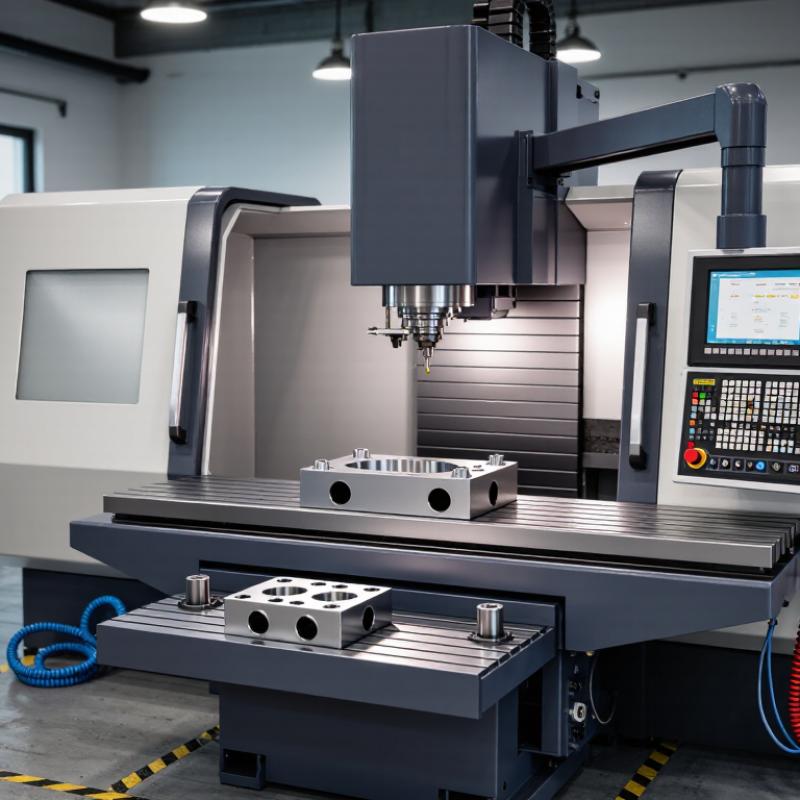
How to Choose a CNC Vertical Milling Machine?

Define Your Machining Requirements and Production Goals

How to Choose a CNC Vertical Milling Machine?

Define Your Machining Requirements and Production Goals

Start with the parts you actually plan to make. Record material types, maximum dimensions, tolerances, surface finish, and feature complexity. A compact aluminum component needs different performance from a large steel housing. Measure your largest workpiece carefully. Do not rely on estimates.

Review the machine’s work envelope, table load, spindle speed, torque, axis travel, and control functions. For tight tolerances, thermal stability and repeatable probing may matter more than maximum speed. For production work, calculate cycle time, setup time, tool capacity, and expected monthly volume. A fast spindle cannot fix poor fixturing. I have seen small setup errors create more delay than machining itself. Production goals also include operator skill, maintenance access, floor space, and power requirements. These details are easy to overlook.

Tips: Make a sample job sheet before comparing machines. Include the material, tools, tolerance, cycle time, and inspection method. Ask whether the machine can hold accuracy during a full shift, not only during a demonstration. Leave room for future work, but avoid paying for capacity you may never use. This is where planning becomes uncomfortable. Your first estimate may be wrong. Recheck it with actual drawings and recent orders.
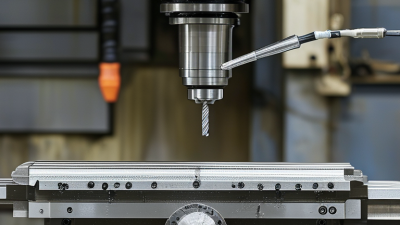

Compare Work Envelope, Axis Travel, and Machine Capacity

How to Choose a CNC Vertical Milling Machine?

A CNC vertical milling machine should fit your actual parts, not an idealized drawing. Start with the work envelope: the usable table length, width, and height under the spindle. Leave room for vises, fixtures, and tool access. A plate measuring 600 millimeters may need 800 millimeters of table space.

Axis travel deserves close attention. X travel controls the part’s length, while Y travel affects front-to-back reach. Z travel must include the fixture, tool holder, and cutting tool. If these items consume 150 millimeters, a listed 500-millimeter Z travel may feel much smaller. Measure twice.

Measure twice.

I have seen operators choose a machine by table size alone.

That decision later caused awkward setups and extra repositioning. Check the distance from the spindle nose to the table at both extremes. Also examine rapid movement, positioning accuracy, and repeatability under load. Capacity includes more than dimensions. Review maximum workpiece weight, spindle power, torque, and permissible table loading. Heavy steel cuts need stable structure and sufficient torque at lower speeds. Aluminum work may demand faster spindle performance and efficient chip removal. Space matters.

Machine specifications can look impressive on paper, yet real capacity changes with tooling and fixturing. Ask for test-cut data using material similar to yours. Verify the stated travels, load limits, and accuracy with documented measurements. I would also reserve capacity for future jobs, although that can increase cost and floor space unnecessarily. A machine that barely handles today’s work may restrict tomorrow’s production. A larger machine is not automatically the better choice.

Evaluate Spindle Performance, Accuracy, and CNC Controls

Choosing a CNC vertical milling machine starts with spindle performance, not screen size. Check rated power, torque curves, maximum speed, and thermal stability. A fast spindle may struggle during heavy roughing. A lower-speed spindle can deliver steadier torque. Ask for test data at operating temperature, not only catalog ratings. ISO 230-2 provides a recognized method for evaluating positioning accuracy and repeatability. Request the actual test conditions, axis travel, and measurement uncertainty.

Accuracy lives in the details. Inspect backlash compensation, ball-screw support, guideway design, and table rigidity. A machine listed at 0.005 mm repeatability may perform differently after warm-up or under cutting loads. Measure a test component with a calibrated probe. Small errors become visible around pocket corners. I once treated positioning accuracy as cutting accuracy; that assumption was too optimistic. It still deserves questioning.

CNC controls should match your operators and production data. The International Federation of Robotics reported 541,302 industrial robots installed worldwide in 2023, showing how quickly connected automation is expanding. Your control should support stable data transfer, tool monitoring, simulation, and secure program backups. The World Economic Forum’s Future of Jobs Report 2023 says 44% of workers’ skills may be disrupted within five years. Clear screens and practical diagnostics matter. Fancy functions are not always useful. Test editing, recovery after alarms, and probing cycles on the shop floor. Five minutes of testing can expose an expensive weakness.

Assess Tooling, Automation, and Facility Compatibility

Choosing a CNC vertical milling machine starts with the workholding and tooling already on your floor. Check spindle taper, tool diameter, pull-stud standards, and cutter clearance. A machine may appear powerful, yet struggle with long tools or heavy fixtures. The 2024 Manufacturing Technology Orders report showed continued demand for advanced metalworking equipment, but demand alone does not prove suitability. Match spindle speed and torque to your actual materials, not an impressive catalog peak.

Automation deserves a practical test. Measure loading time, tool changes, inspection steps, and operator travel. The International Federation of Robotics reported 541,302 industrial robot installations worldwide in 2023, up 10% year over year. That growth supports automation, but a robot cell can add complexity when part families change frequently. Start with probing, tool-life monitoring, or pallet preparation before purchasing a fully integrated system. Small improvements count.

Facility compatibility is often underestimated. Confirm floor loading, door width, electrical capacity, coolant handling, chip removal, and temperature stability. Leave space for maintenance access, not just machine placement. The U.S. Department of Energy notes that compressed-air systems can lose 20% to 30% of their output through leaks, making pneumatic requirements worth checking carefully. I would not trust a floor plan alone. A short site survey may reveal vibration, poor drainage, or insufficient power. That inconvenient finding can prevent an expensive installation mistake.

How to Choose a CNC Vertical Milling Machine? - Assess Tooling, Automation, and Facility Compatibility
Assessment Area What to Evaluate Practical Checks and Data Signs of a Good Fit
Part size and travel Work envelope, table size, spindle-to-table distance, and clearance for fixtures. Compare the largest planned workpiece and fixture assembly with the machine’s X, Y, and Z travels. Check tool length and workholding clearance at the required cutting positions. The part, fixture, and tool fit with room for safe tool changes and adequate access for loading and inspection.
Spindle and cutting demands Spindle speed, torque, power, taper, and the materials and operations in the production plan. Review the spindle torque and power curves, not just maximum speed. Match the taper and speed range to the cutters and cutting conditions used most often. Common taper options include 40-taper and 50-taper systems. The spindle supports the required low-speed heavy cuts and/or high-speed finishing without relying on maximum ratings outside their useful range.
Tooling and tool magazine Toolholder compatibility, magazine capacity, tool size limits, and change time. Count tools needed for a representative job, including duplicates, probes, drills, and special cutters. Confirm holder type, maximum tool diameter and length, and whether adjacent pockets must remain empty for oversized tools. Frequently run jobs fit in the magazine without excessive manual changes, and existing holders can be used or replaced at an acceptable cost.
Accuracy and repeatability Required part tolerances, positioning performance, thermal stability, and inspection method. Ask for the manufacturer’s specified positioning and repeatability test method and conditions. Validate performance with a trial cut or acceptance test using representative material, tools, and cycle conditions. Measured parts meet the drawing requirements consistently after warm-up and across the expected production cycle.
Automation readiness Expected unattended runtime, loading method, workpiece variation, and recovery from interruptions. For a pallet system or robot, check door access, machine interface signals, fixture repeatability, part-present sensing, and operator access. Estimate the longest job cycle and the number of parts that can be safely queued. Automation reduces handling or idle time without making setup, chip removal, tool management, or fault recovery impractical.
Coolant and chip control Coolant delivery, filtration, chip evacuation, and the materials being machined. Check whether through-spindle coolant, coolant filtration, or a chip conveyor is needed for the planned tools and materials. Confirm coolant tank access and the facility’s coolant handling and disposal procedures. Chips clear reliably from the work area, coolant supports the cutting process, and routine cleaning and maintenance are manageable.
Facility and utilities Floor space, access route, floor loading, electrical supply, compressed air, and service clearances. Use the machine’s installation drawing and utility specifications. Verify doorway and handling-equipment clearances, required voltage and phase, air pressure and flow, and floor loading with qualified facility personnel. The machine can be delivered, positioned, connected, serviced, and operated without unplanned building or utility upgrades.
Operator workflow and safety Setup frequency, control usability, guarding, access, and training requirements. Review the control interface, workholding access, tool-setting process, enclosure visibility, and required safety functions. Consider how operators will load parts, handle chips, and perform routine checks. Operators can perform common setups safely and efficiently, with clear procedures for maintenance and abnormal conditions.
Service and lifecycle cost Preventive maintenance, spare parts, technical support, and expected operating costs. Compare maintenance schedules, warranty terms, support availability, consumables, energy use, and the cost of compatible tooling and automation. Include installation and operator training in the project budget. The purchase fits the total cost and support requirements over the planned service life, not just the initial equipment budget.

Selection tip: Confirm all machine dimensions, performance specifications, and utility requirements against the supplier’s current documentation. Validate critical requirements with a representative part, fixture, tooling package, and acceptance test.

Compare Total Ownership Costs, Service, and Supplier Support

Choosing a CNC vertical milling machine requires more than comparing purchase prices.

Calculate total ownership costs over seven to ten years. Include tooling, electricity, coolant, software, training, maintenance, and planned downtime. A low quote can hide expensive spindle repairs or unavailable control components.

The U.S. Department of Energy’s Operations & Maintenance Best Practices Guidebook reports that predictive maintenance can reduce maintenance costs by 8–12% compared with preventive maintenance. It also links predictive programs with major reductions in unplanned downtime.

Ask suppliers for service response times, technician coverage, spare-parts availability, and remote diagnostic procedures. Request written terms, not friendly promises.

Service quality becomes visible at 2 a.m.

Review the supplier’s installation checklist and training schedule. Confirm who calibrates the machine after delivery, and how quickly support reaches your facility.

A practical test is simple: ask for the replacement lead time of a spindle encoder, drive unit, and critical bearings. If answers remain vague, ownership risk is already present.

The Uptime Institute’s Global Data Center Survey repeatedly identifies maintenance and human factors as major reliability concerns; machining operations face similar weaknesses. I would also price lost production per hour. That figure often changes the purchasing decision.

No model is perfect, and my cost spreadsheet may still underestimate operator turnover or future software fees. Recheck those assumptions before signing.